
Suryanamaskar isn’t just a morning ritual. It’s a full conversation with your body, breath and mind. It wakes you up from the inside out. It stretches what’s tight. It energizes what’s dull. It steadies what’s messy. That’s the charm. It’s simple. It’s ancient. It’s powerful.
Seen as a moving prayer, Suryanamaskar blends twelve postures, steady breath and gratitude toward the rising sun. You honor light, energy and new beginnings while giving your entire body a complete workout.
Let’s break down the magic behind this practice, how to do each pose and the mantras that make it spiritually rich.
Why Suryanamaskar Has So Much Power
Suryanamaskar isn’t random stretching. It’s rhythmic. It’s structured. It’s aligned with the natural flow of breath.
Here’s what makes it powerful:
• Boosts flexibility
• Activates every major muscle group
• Improves digestion
• Enhances lung capacity
• Strengthens joints
• Sharpens focus
• Balances hormones
• Releases stress
It’s basically the Swiss army knife of yoga.
The 12 Steps of Suryanamaskar (With Simple Breakdown)
Suryanamaskar includes twelve poses. They flow like a wave – gentle rise, gentle fall, breath guiding everything.
1. Pranamasana – Prayer Pose
Stand tall. Hands at the center of your chest. Keep your breath soft. This sets your intention.
2. Hasta Uttanasana – Raised Arms Pose
Lift your arms upward. Arch slightly back. Open your chest. Stretch into the morning light.
3. Hasta Padasana – Forward Fold
Bend forward. Drop your hands toward the floor. Loosen your neck. Let gravity help.
4. Ashwa Sanchalanasana – Equestrian Pose
Step your right leg back. Open your chest. Look forward. Feel the stretch in your hips.
5. Dandasana – Plank Pose
Both legs back. Body straight. Engage your core. Steady like a board.
6. Ashtanga Namaskara – Eight Limbs Pose
Knees down. Chest and chin lowered. Hips slightly raised. Touch eight points to the floor.
7. Bhujangasana – Cobra Pose
Slide forward. Lift your chest. Shoulders relaxed. Heart open.
8. Adho Mukha Svanasana – Downward Facing Dog
Lift your hips up. Create an inverted V. Lengthen your spine.
9. Ashwa Sanchalanasana – Equestrian Pose (Left Leg Forward)
Step your left leg forward this time. Keep your gaze soft.
10. Hasta Padasana – Forward Fold
Fold again. Chest close to thighs. Relaxes your entire back.
11. Hasta Uttanasana – Raised Arms Pose
Lift up. Stretch back. Pull energy upward.
12. Pranamasana – Prayer Pose
Return to starting. Feel the cycle complete.
That’s one round. Most people do twelve. Even four full rounds can change the vibe of your entire morning.
Mantras for Each Step of Suryanamaskar
Chanting mantras makes the practice richer and more mindful.
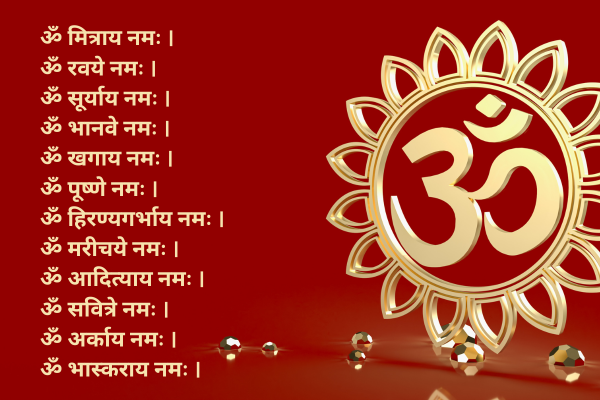
Here are the twelve Surya mantras:
- Om Mitraya Namah
- Om Ravaye Namah
- Om Suryaya Namah
- Om Bhanave Namah
- Om Khagaya Namah
- Om Pushne Namah
- Om Hiranyagarbhaya Namah
- Om Marichaye Namah
- Om Adityaya Namah
- Om Savitre Namah
- Om Arkaya Namah
- Om Bhaskaraya Namah
You can chant them softly or mentally while flowing.
Benefits of Practicing Suryanamaskar Daily
• Stronger spine and core
• Better metabolism
• Improves blood circulation
• Calms your mood
• Enhances flexibility
• Strengthens arms and legs
• Improves posture
• Reduces anxiety and fatigue
It’s one practice that covers fitness, breathwork and meditation at the same time.
Common Mistakes to Avoid
• Rushing the sequence
• Holding your breath
• Overarching your back
• Locking your knees
• Ignoring alignment
• Practicing immediately after eating
Slow. Steady. Breath-led. That’s the recipe.
Best Time to Practice
Early morning. Empty stomach. Quiet space. But honestly, any time that works for you is the right time.